
Two Holidays, Two Traditions: Warding the Spirits Off Versus Welcoming Them Home
by Kate Avalos
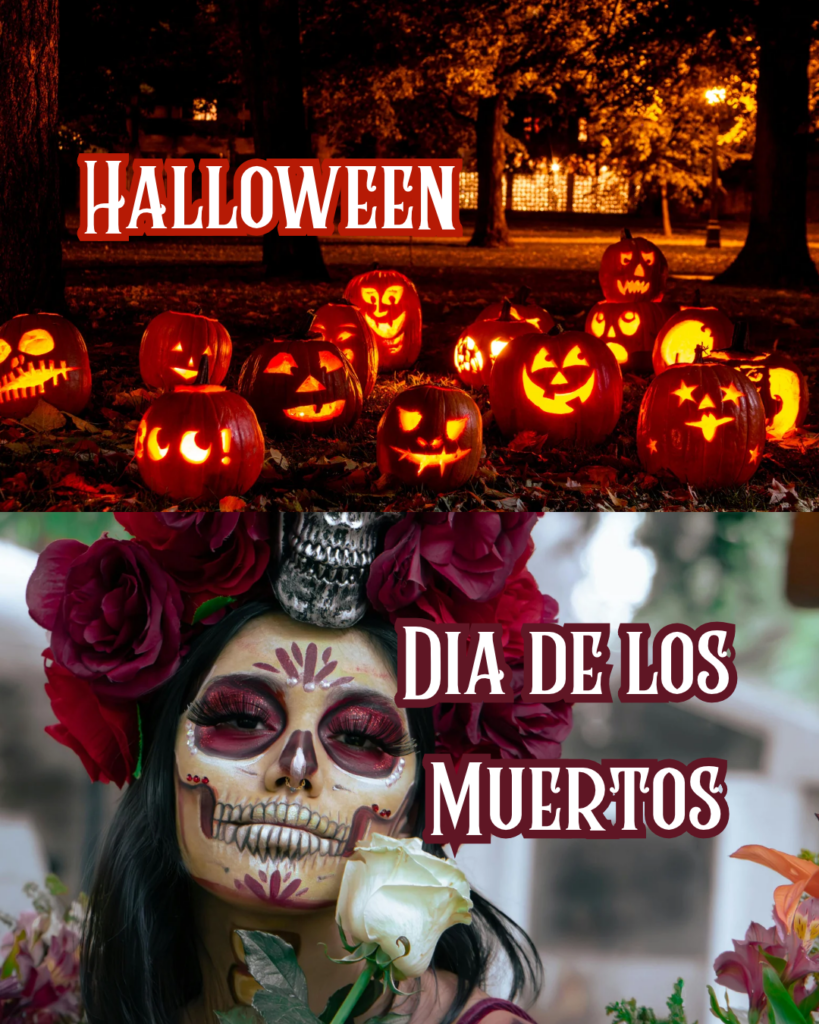
Every autumn, people get ready to celebrate two holidays associated with death and the afterlife that are often mistaken for being basically the same holiday. While Halloween (October 31) and Día de los Muertos (November 1-2) do share the core belief that the dead return to the world of the living, the attitude towards this couldn’t be more different. Día de los Muertos is a joyful celebration in which lost loved ones are welcomed back, while Halloween is a fearful time for all things spooky.
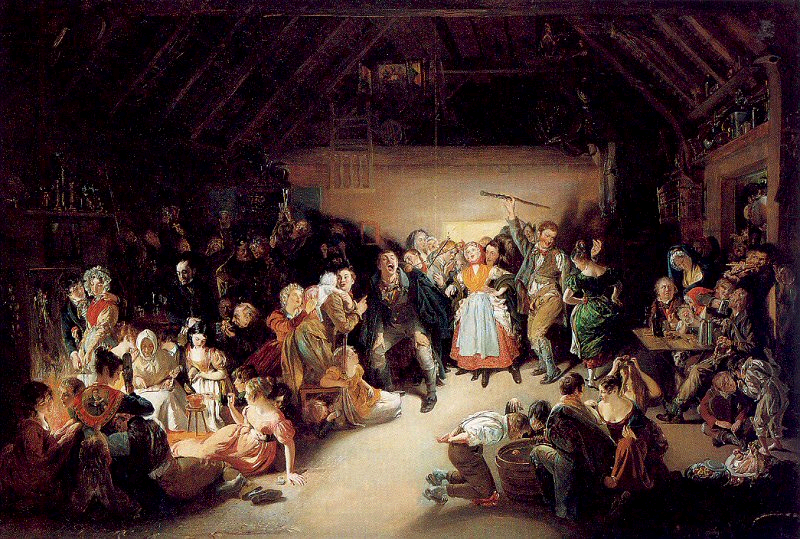
Halloween has pagan roots with the Celtic festival of Samhain, a celebration to welcome the harvest and signal the transition to the new year on November 1. The festival included burning crops and animals in bonfires as sacrifices for their deities. The Celts believed that on the night of October 31, the veil between the living and dead was very thin and the dead could return. In order to not be terrorized by the returning spirits, the Celts wore disguises to not be recognized and confuse the spirits.
Over time, Christianity began influencing the festival of Samhain. In the 8th century, Pope Gregory III moved the festival of all saints and martyrs from May 13 to November 1, and then in 1000 A.D., the church made a day to honor the dead, All Souls’ Day, on November 2. These holidays were most likely created to replace the Celtic festival with a Christian one. The All Saints’ Day celebration on November 1 was called All-Hallows, and the night before became All-Hallows Eve, eventually becoming Halloween.
In stark contrast, Dia de los Muertos not only welcomes returning spirits, but people build ofrendas (altars) decorated with offerings to help lead the dead back. Ofrendas are adorned with items such as food, drinks, photos, candles, and marigolds. People will also go to the graves of loved ones and leave similar items. November 1 honors infants and children, Día de los Inocentes (Day of the Innocents) or Día de los Angelitos (Day of the Little Angels), and November 2 honors everyone else.
It is believed Día de los Muertos is a combination of Mesoamerican cultures and Christianity. Like Halloween, this holiday has pre-Christian roots with the Nahua (Aztecs are part of this group) people of Mexico. They believed that upon death, the soul traveled to Chicunamictlán, the Land of the Dead, and would have to go through nine levels with different challenges. Only after getting through all nine levels would the person’s soul reach its final resting place, Mictlán. Family members provided the soul with everything it would need for the journey. This is probably where the offerings left at ofrendas and graves stem from. After the Spanish conquest of Mexico, Spanish and European traditions crept in, such as All Souls Day. In medieval Spain, to celebrate All Souls Day, people would bring wine and pan de ánimas (soul bread) to the graves of their loved ones and cover graves with flowers. They would light candles to illuminate the path to the living world for the souls.
Both holidays rely heavily on skeletons in their decorations, but the meaning behind them is very different. In Halloween décor, skeletons are a creepy representation of death. The Celts would burn the bones of animals in “bone fires” later called bonfires, to ward off the evil spirits. Skeletons are also associated with Europe’s Danse Macabre, where they represent death in art and religious relics. To the Celts and later medieval people, skeletons became the symbol of the natural cycle of life and death.
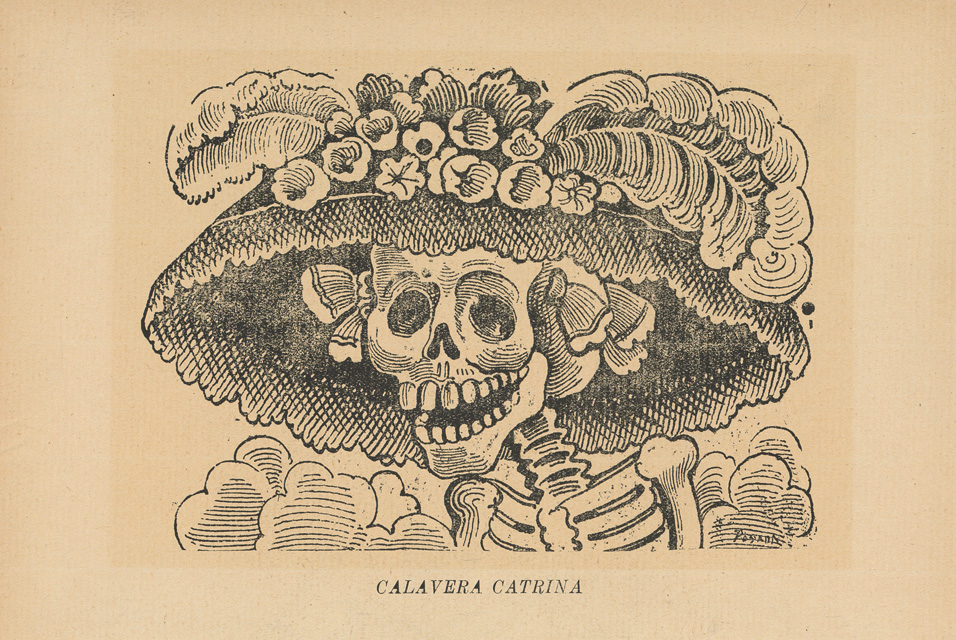
Skeletons also found their way into Día de los Muertos, but more as social commentary than scary representations of death. In the 18th and 19th centuries, humorous poems, often sarcastic epitaphs, were published in newspapers called calaveras (skeletons). Mexican political cartoonist and lithographer José Guadalupe Posada created an etching to go with a literary calavera. His personification of death was a skull that wore an elegant French hat. His message was that underneath all the wealth, we are all the same. In 1947, Diego Rivera included a skeleton in his mural “Dream of a Sunday Afternoon in Alameda Park.” His female skeleton was named Catrina, which is slang for “the rich.” Today, the calavera Catrina has become an icon for Día de los Muertos.
So while both holidays fall very close together on the calendar and share some similar iconography, the meanings behind the holidays couldn’t be more different. One is a celebration of life and death, while the other is a celebration of all things creepy!